No te whanau "hex socket Screws" A2-70. E ai ki nga "Hex bolt specifications", he rite ki te ISO 4762 / DIN 912. He kaha te kaha o te ≥700 N / mm², he mea hanga mai i te 18-8 He kowiri tira, a ka kore e waikura mo te wa roa ahakoa i roto i nga taiao makuku, kai ranei.
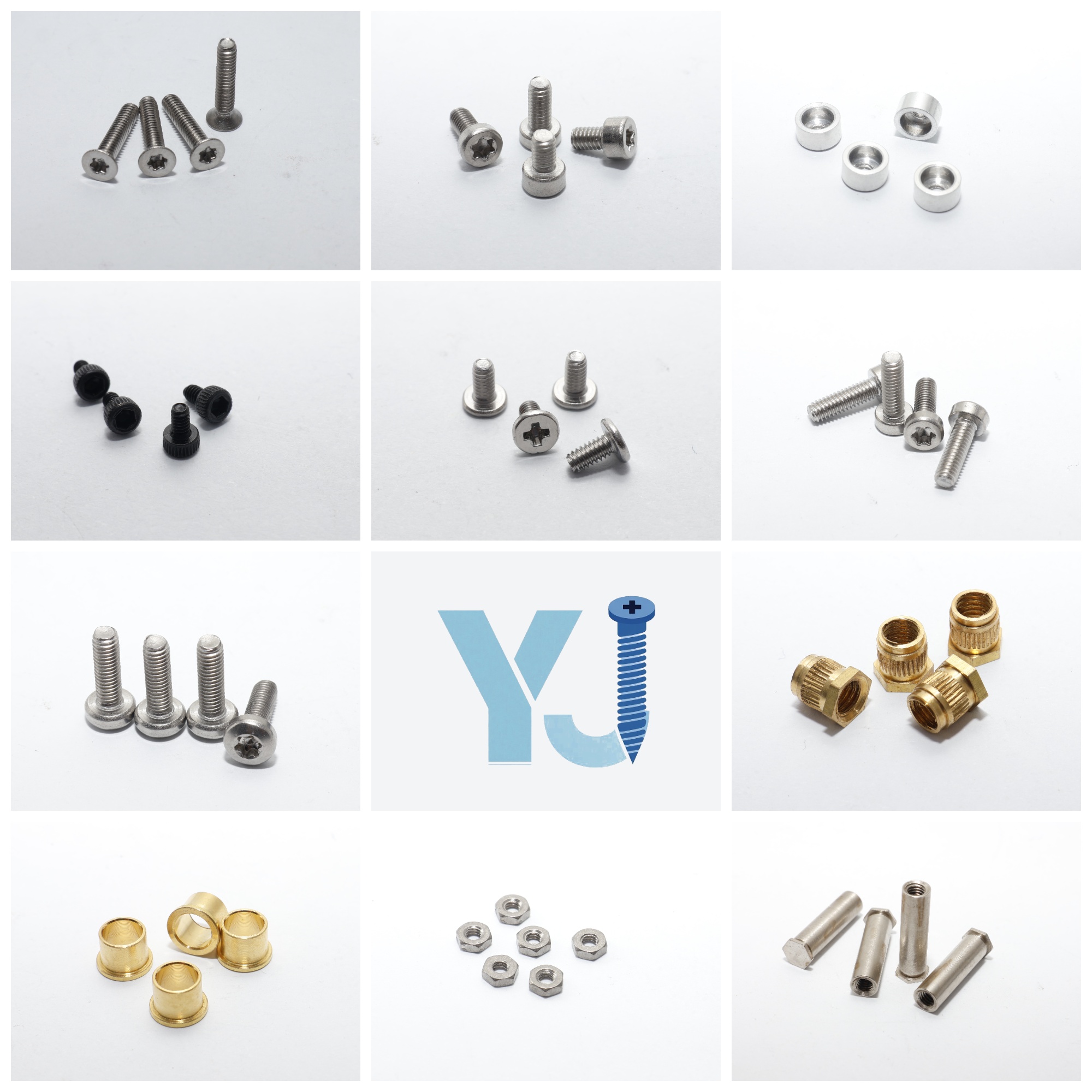
Shanghai Yijun Precision Technology Co., Ltd.
Te tono hua: Te Hikohiko Tika, Nga taputapu rongoa, te whakaatu LED, nga papa, te robot, nga waahanga miihini, te whakawhitiwhiti waea pūkoro, te karaka karaihe, te kakahu mohio, te taputapu, te waka rererangi kore, Nga waahanga motuka.
I roto i nga taapii uaua o nga mahi miihini hou me nga mahi hanga, he iti noa nga waahanga kei nga waahi katoa engari kaore i te maioha penei i te wiri. I roto i nga momo momo maha e waatea ana, ko te Hex Socket Head Screw A2-70 e tu ana hei tauira mo te whai kiko, te kaha, me te auKati i te waikura. I whakamahia i roto i nga umanga mai i te moana tae atu ki te aerospace, kua waiho tenei taputapu hei taputapu tino nui mo nga miihini, tohunga toi, me nga tohunga hangarau.
Ko te tohu "A2-70" he nui ake i te waehere matapōkere-e rua nga huanga whakahirahira: te karaehe rauemi me te karaehe kaha tensile.
Ko te A2 e tohu ana mo te kowiri tira 304 (UNS S30400), he koranu e whakamahia nuitia ana e mohiotia ana mo tona tino parenga waikura. Ko te 18–20% te chromium, te 8–10.5% te nickel, me te nui o te konupora me te silicon, ko te A2 kowiri tira ka hanga he apa chromium waikura hāngū ki runga i te mata ina kitea ki te hāora. Ka noho tenei paparanga hei arai i te waikura, i te makuku, i te paheketanga matū—ahakoa kua rakurakuhia, ka tere te whakarereketanga o te paparanga kia mau tonu te whakamarumaru. Ko te Nickel te whakanui ake i te ngawari me te uaua, ka iti ake te pakaru o te rino me te kaha ake ki nga kawenga ohorere.
Ko te nama 70 e tohu ana i te iti rawa o te kaha riaka o te wiri: 700 megapascals (MPa), 70 N/mm² ranei. Ka tuu te A2-70 ki roto i te waahanga kaha reo-tiketike, e tika ana mo nga tono e hiahia ana kia kaha te kawe kawenga me te aukati waikura. Mo te horopaki, ko te A2-50 (he momo kaha iti ake) he iti rawa te kaha o te 500 MPa, ko te A2-70 he pai mo nga ahuatanga teitei ake penei i nga hononga hanganga me nga miihini taumaha. Ko etahi atu taonga miihini ko te kaha tuku o ~450 MPa (te ahotea i timata ai te ahua o te wiri) me te roanga o ~40% (te kaha ki te totoro i mua i te pakaru), ka mau tonu ki nga taumahatanga hihiri.
The hex socket head (also called Allen head) is a defining feature of this screw, offering distinct benefits over traditional slotted or Phillips heads:
1. Positive Engagement & Torque Efficiency
Unlike slotted heads, which rely on friction between the tool and slot edges, the hex socket uses a precise, hexagonal recess that locks the tool (Allen key or hex driver) in place. This positive engagement eliminates “cam-out”—a common issue where the tool slips out of the head when torque is applied, leading to stripped heads and damaged workpieces. The hex design transfers torque more efficiently, making it suitable for high-torque applications like automotive engine mounts or aerospace panel Fasteners.
2. Flush & Aesthetic Fit
The cylindrical head with a recessed socket allows the screw to sit flush or countersunk with the workpiece surface. This gives a clean, modern look—perfect for furniture, electronics, or architectural cladding where visible fasteners are undesirable. For example, a glass coffee table might use A2-70 hex socket screws to attach legs, creating a seamless, uncluttered design.
3. Versatility in Tight Spaces
The compact size of the hex socket head makes it ideal for installations in confined areas (e.g., under car dashboards or inside electronic devices). Allen keys and hex drivers are available in various lengths (including short “stubby” versions) to reach hard-to-access spots, while power tools with hex bits enable rapid assembly in mass production.
4. standardization
Hex socket sizes are globally standardized (metric: M2 to M30; imperial: 1/16” to 3/8”), ensuring compatibility with widely available tools. This standardization reduces complexity in supply chains and makes it easy to find replacement parts or tools.
The combination of corrosion resistance, strength, and design flexibility makes A2-70 hex socket screws suitable for diverse industries:
Saltwater is one of the harshest environments for metal fasteners, but A2-70 screws thrive here. They are used in boat hulls, deck fittings (cleats, railings), engine components, and navigation equipment. For example, a sailboat’s winch mounts use A2-70 screws to withstand constant salt spray and heavy loads—their corrosion resistance ensures the winch remains secure for years.
Under the hood, components like fuel injectors, sensor mounts, and exhaust system parts rely on A2-70 screws. The stainless steel resists corrosion from oil, coolant, and road salt, while the hex socket design allows for precise torque application. Electric vehicles (EVs) also use these screws for battery pack mounts—their non-magnetic properties (A2 stainless steel is weakly magnetic) prevent interference with sensitive electronics.
Weight and reliability are critical in aviation. A2-70 screws are used in interior components (seat mounts, overhead bins) and exterior parts (panel fasteners) because they are lightweight (compared to carbon steel) yet strong enough to handle flight stresses. Their corrosion resistance is also vital for aircraft operating in humid or coastal regions.
In humid or coastal buildings, A2-70 screws are used for structural connections (metal beam attachments, cladding) and finishing work (window frames, door hinges). They resist rust from rain and humidity, ensuring long-term structural integrity. For example, a high-rise building in a tropical city might use these screws to fasten aluminum cladding, as they prevent corrosion and maintain a clean aesthetic.
Precision is key in electronics—A2-70 hex socket screws are used to assemble circuit boards, battery compartments, and smartphone casings. Their flush fit ensures no protruding parts interfere with device functionality. In medical devices, A2 stainless steel’s biocompatibility makes these screws ideal for surgical instruments (forceps, scalpels) and equipment mounts—they can be sterilized repeatedly without corroding.
Modern furniture often uses hidden fasteners to achieve a minimalist look. A2-70 hex socket screws are perfect for this—they attach table legs, cabinet doors, and shelf brackets without being visible. For example, a modular sofa might use these screws to connect sections, allowing easy assembly and disassembly.
To maximize the performance of A2-70 hex socket screws, follow these guidelines:
1. Choose the Right Tool
Use a correctly sized Allen key or hex driver—worn tools or mismatched sizes can strip the socket. For power tools, use high-quality hex bits to avoid deformation.
2. Prepare the Workpiece
Clean the surface to remove debris. For wood, drill a pilot hole slightly smaller than the screw shank to prevent splitting. For metal, tap threads (if using machine screws) to ensure proper engagement.
3. Control Torque
Over-tightening can strip the socket or damage threads; under-tightening leads to loosening. Use a torque Wrench set to the recommended value (e.g., M6 screw: ~8–10 Nm). Refer to industry standards (like ISO 898-1) for torque specifications.
4. Prevent Galling
Stainless steel is prone to galling (metal-on-metal sticking). Apply an anti-seize compound (copper-based or graphite) to threads before installation to reduce friction and ease removal later.
5. Ensure Adequate Thread Engagement
The screw should engage with at least 1.5x its diameter in the workpiece (e.g., M8 screw: 12 mm engagement). This ensures maximum load-bearing capacity and prevents pull-out.
Ko te tiaki i nga wa katoa ka roa te roa o te A2-70.
Inspect for Corrosion: For marine or coastal applications, check screws every 3–6 months for pitting or rust. Clean affected areas with a stainless steel brush and apply a corrosion inhibitor.
Check Torque: Vibration (e.g., in cars or machinery) can loosen screws. Re-torque during routine maintenance using a torque wrench.
Replace Damaged Screws: If the socket is stripped, use a screw extractor or super glue (applied to the Allen key) to remove it. Never reuse damaged screws—they may fail under load).
The hex socket head screw A2-70 is more than just a fastener—it is a testament to engineering ingenuity. Its combination of corrosion resistance, strength, and design flexibility makes it indispensable across industries, from marine to medical. By understanding its properties, following installation best practices, and maintaining it properly, we can ensure this small but critical component continues to hold our world together reliably. As technology advances, the A2-70 screw will evolve to meet new challenges, solidifying its place as a cornerstone of modern manufacturing.

 English
 Español
 Portugues
 Pусский
 Français
 Deutsch
 日本語
 한국어
 العربية
 Italiano
 Nederlands
 Ελληνικά
 Svenska
 Polski
 ไทย
 Türk dili
 हिन्दी
 Indonesia
 Melayu
 Tiếng Việt
 中文
 dansk
 Magyar
 қазақ
 বাংলা
 עִברִית
 čeština
 Soomaali
 မြန်မာ
 فارسی
 українська
 norsk
 Gaeilge
 беларускі
 Română
 ພາສາລາວ
 Filipino
 lietuvių
 Cymraeg
 македонски
 Suomalainen
 slovenský
 o'zbek
 اردو
 հայերեն
 Igbo
 български
 سنڌي
 Shona
 සිංහල
 Hrvatski
 íslenskur
 galego
 català
 Zulu South Africa
 Afrikaans isiXhosa
 ಕನ್ನಡ
 lëtzebuergesch
 Indonésia Sunda
 Кыргызча
 тоҷикӣ
 Србија
 Twi
 Hawaii
 Cebu
 नेपाल
 euskara
 frissi
 יידיש
 latvija
 slovenija
 kiswahili
 ਪੰਜਾਬ
 پښتو
 საქართველოს
 bosna
 Kreyòl ayisyen
 Eesti
 Gàidhlig na h-Alba
 Samoa
 Монгол
 Azərbaycan
 አማራ
 Shqipëria
 Malagasy
 Malta
 ខ្មែរ
 Chicheva
 中文(繁体)
 ଓଡିଆ
 Setswana
 Afrikaans
 Aymara
 Башҡорт
 Türkmenler
 ትግሪኛ
 Afaan Oromoo
 অসমীয়া
 Kinyarwanda
 Ilocano
 Wolof
 अवधी
 Oluganda
 Bikol
 Fulɓe
 Kikongo
 Sango
 ދިވެހި
 Lingala
 मैथिली
 Tsonga
 ꯃꯦꯏ ꯊꯥꯏ꯫
 brezhoneg
 Furlan
 नेवा
 རྫོང་ཁ
 Santali
 Аҧсуа
 Нохчийн
 Чӑваш
 Татар
 Batak Karo
 دری
 Diura
 Fengyu
 Eʋegbe
 Iban
 Fiji
 Tonga
 Inuktitut
 Nahuatl
 maaya yucatec
 Runasimi
 guarani
 Qafar
 Acholi
 Dinka
 Luo
 Lundi
 isiNdebele
 Tshivenḓa
 Sesotho sa Leboa
 Sesotho sa Borwa
 Ndumbe
 Papuan Pidgin
 Rromani ćhib
 Thok Nath
 Rapu



 Waea